Quick Answer
Clean aluminium frames, glass, tracks and screens with fresh water, mild detergent and a soft cloth. Check moving parts, seals and drainage openings regularly, and deal promptly with grit, corrosion, sticking or water ingress. Coastal exposure may call for more frequent rinsing. Avoid abrasive tools and harsh cleaners, and ask a window professional to assess persistent faults.
Explore related options: custom aluminium awning windows · related Sydney guide · aluminium sliding options
Why regular care matters in Sydney
Aluminium windows and doors are generally straightforward to maintain, but they are not maintenance-free. Dust, grit, salt carried in coastal air, leaf litter and everyday use can build up on frames and moving parts. If debris is left in tracks or drainage paths, a sash or sliding panel may become harder to operate, while dirty surfaces can become more difficult to clean over time.
Sydney conditions vary by location. A home close to the coast, an exposed headland or a busy road may collect salt or grime faster than a more sheltered inland property. Shaded, damp areas may also need closer attention to surface dirt and moisture. Treat the schedules in this guide as a starting point: inspect more often if you notice deposits or a change in operation.
Routine care also helps you notice small changes before they become bigger inconveniences. A handle that feels loose, a seal that has shifted or a new water mark near a window is worth investigating. Cleaning can help identify these changes, but it cannot correct worn components, poor adjustment or a leak in the surrounding building. If a problem persists, get the cause assessed rather than forcing the window or door.
Clean frames, glass and screens gently
For ordinary cleaning, use clean water, a small amount of mild detergent and a soft sponge or cloth. Rinse away detergent and loosened dirt, then dry the frame with a clean, soft cloth if needed. Work from the top down so dirty water does not run over an area you have already cleaned. Follow any care instructions supplied with your windows, doors, glass or finishes.
- Remove loose dirt first. A gentle rinse helps prevent grit from being rubbed across the surface.
- Use soft tools. Choose a non-abrasive cloth or sponge and a suitable squeegee for glass.
- Rinse thoroughly. Soap residue can leave marks, particularly on glass and darker finishes.
- Clean screens carefully. Remove loose dust with a soft brush or gentle rinse. Do not press hard on mesh, which can stretch or come away from its frame.
Avoid steel wool, scouring pads, abrasive powders and strong chemicals unless the product manufacturer specifically confirms they are suitable. Solvents, acidic or alkaline cleaners and concentrated bleach may damage a finish or nearby materials. Do not use a pressure washer close to seals, joints or drainage openings: forceful water can get where it is not intended to go. If you are unsure about a stain or cleaner, test in a discreet area only where the product guidance allows, or ask the supplier for advice.
Clean glass in suitable conditions, rather than in hot direct sun when cleaning solution may dry quickly and leave streaks. If glass has stubborn marks, first identify what they are; scraping with a blade can scratch glass or damage coatings. Use a glass-care product only if it is appropriate for the particular glass.
Clear tracks and check drainage
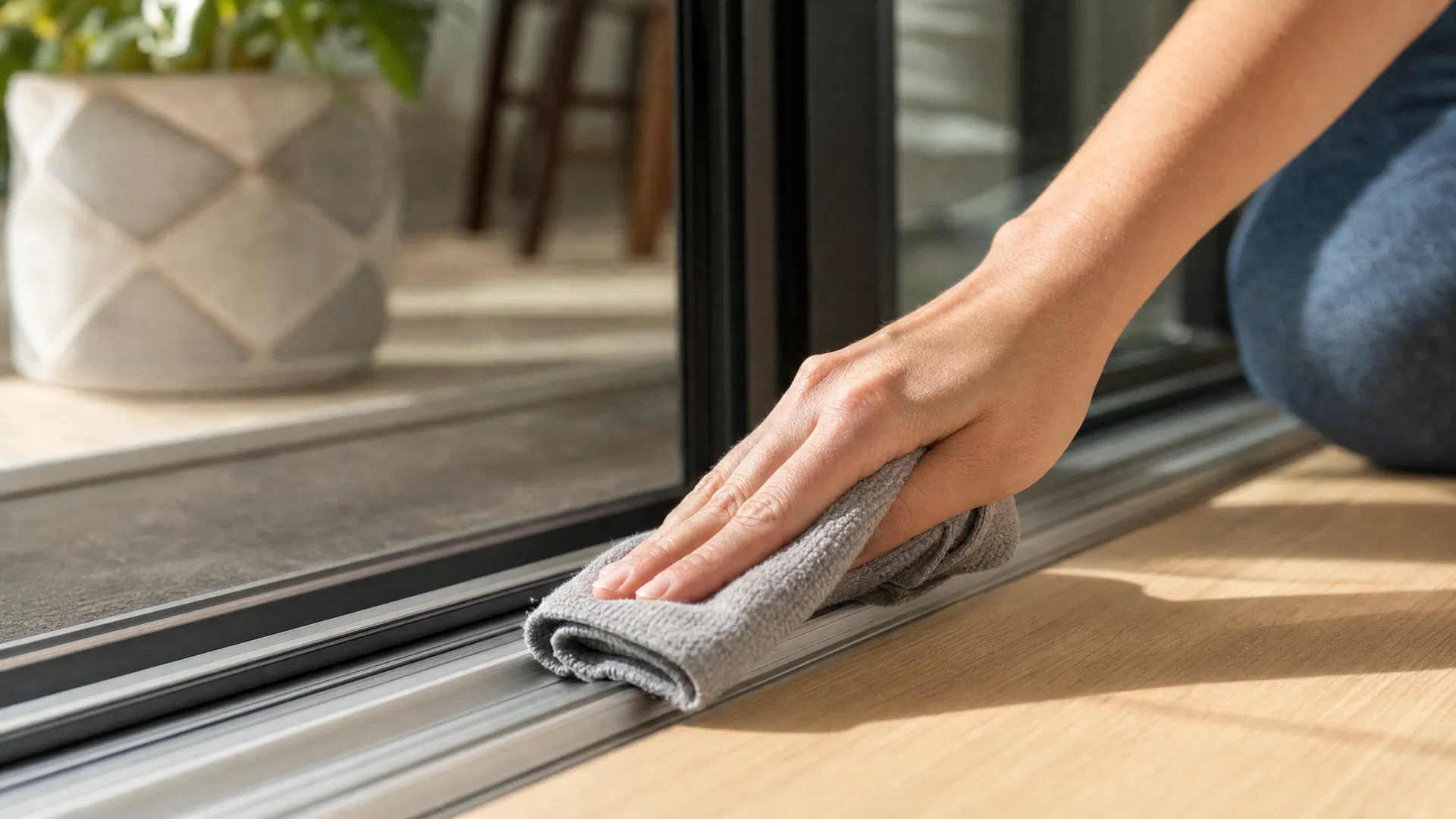
Sliding windows and doors rely on clean tracks for smooth movement. Vacuum loose dust and debris using a soft brush attachment, then wipe the track with a damp cloth. For corners, use a soft brush or cloth rather than a sharp tool. Grit left under a sliding panel can add friction and may wear moving components, so include the full track in your cleaning routine.
Many window and door systems are designed to manage water through drainage paths or small openings in the frame. Keep visible openings clear of leaves, dust and cobwebs, but do not push wire, drills or other sharp objects into them. Avoid sealing over an opening because it looks untidy: it may have a functional purpose. If you cannot tell whether an opening is intended for drainage, check the product information or ask the installer.
After heavy rain, look for water sitting where it does not normally collect, damp internal finishes or marks around the frame. A wet track alone does not always identify the source of a problem; water may be entering from the window, the surrounding wall or another part of the building. Record where and when you notice it, and arrange an assessment if water is entering indoors or the issue recurs. Do not rely on cleaning to resolve an unexplained leak.
Inspect moving parts, handles and seals
Open and close each window and door gently during routine checks. Notice whether a sash moves freely, a latch engages as usual and a handle feels secure. Check visible hinges, rollers and other hardware for looseness, damage, dirt or signs of corrosion. A change in operation can have several causes, including debris, adjustment or worn components; avoid forcing the unit or tightening unfamiliar parts without guidance.
Where the product instructions permit lubrication, apply only a small amount of a lubricant specified as suitable for that hardware. Some products attract dust or may affect plastics and seals. Do not assume a general-purpose oil is appropriate, and wipe away excess. If a window remains stiff, scrapes, will not latch or appears to have dropped out of alignment, stop using force and contact a window professional.
Look over accessible weather seals for gaps, tears, hardening or sections that have come loose. A seal can help limit air and water movement, but its condition is only one factor in a window's performance. Do not pull it out or replace it with a generic strip until you know it is the correct type and fit. If you feel a draught, first check that the sash is fully closed and latched; persistent draughts or water entry warrant a closer inspection.
Keep children away from open windows and do not tamper with safety or operating hardware. If a latch, restrictor or other safety-related part is loose or damaged, arrange prompt professional attention rather than improvising a repair.
Set a maintenance routine for your home
A simple routine is easier to keep up with than an occasional intensive clean. The right frequency depends on exposure, use and the advice supplied for your product. As a practical starting point, inspect windows and doors every few months and clean them when dirt or salt deposits become visible. Homes in coastal or exposed locations may need more frequent rinsing than sheltered homes.
- Every few months: look for deposits, check that windows and doors operate normally, and clear accessible tracks and drainage openings.
- When cleaning is needed: wash frames and glass gently, rinse away detergent and clean screens without stretching the mesh.
- After storms or unusual weather: check for debris, new water marks, damaged screens or a change in operation.
- Once a year: give seals, handles, visible hardware and the surrounding frame a more deliberate check, noting any changes for follow-up.
These are practical reminders, not a substitute for the care instructions for your specific system. Keep a brief maintenance note with the date and any symptoms you have found. Photos of a recurring water mark or damaged component can help explain the problem to an installer. If you are planning a renovation, consider whether a window's opening style suits the room and how easily it can be accessed for cleaning. For example, awning windows open outward from the bottom, but access and cleaning arrangements depend on the installation and site.
Recognise problems and know when to call a professional
Some issues can be addressed with routine cleaning; others need assessment. Remove loose dirt from a track before deciding that a sliding panel has a mechanical fault. If it still sticks, grinds or feels unusually heavy, do not keep forcing it. A professional can inspect the hardware, alignment and condition of the frame and explain whether adjustment or repair is appropriate.
Arrange advice if you find a cracked or damaged component, a loose handle, a sash that will not latch, recurring water entry, a seal that has detached or visible corrosion that returns after cleaning. Surface deposits and damage to the underlying material are not the same thing, and a photograph may not be enough to determine the cause. Do not dismantle a frame or remove glass as a maintenance step.
Check any product documents or warranty conditions before attempting a repair. Unapproved alterations or unsuitable replacement parts could create further problems and may affect available warranty support. If your home is a rental, strata property or recently renovated, check the relevant contact or approval process before arranging work. For water ingress, include the surrounding wall and sill in the inspection; the window may not be the only possible source.
Indicative maintenance costs in Sydney
Small cleaning jobs are often manageable with household supplies, while service costs depend on access, the fault, the hardware and whether parts are needed. The broad ranges below are for budgeting only, not a Brightview Aluminium price list or a guaranteed market rate. They are indicative AUD amounts and may differ between providers and jobs. Ask what the quote includes, including travel, labour, parts and any follow-up visit.
| Maintenance item | Indicative AUD range | What can affect the cost |
|---|---|---|
| Basic household cleaning supplies | $10–$40 | What you already own, the products selected and the number of openings. |
| Professional inspection or service visit | $150–$400 | Travel, access, number of units inspected and whether adjustments are required. |
| Minor adjustment or hardware repair | $100–$400 per opening | Fault diagnosis, labour, replacement parts and whether the unit can be repaired. |
These estimates are not a quote and should not be treated as fixed prices. A repair may cost more if a component is unavailable, access is difficult or a larger issue is found. If a unit needs replacement rather than maintenance, the price depends on its dimensions, configuration, glazing, finish, access and installation requirements. An on-site measure and written quote determine final price for custom replacement work. Brightview Aluminium can provide information about its products and arrange a free measure and quote for homeowners considering new aluminium windows or doors.
Frequently Asked Questions
How often should I clean aluminium windows in Sydney?
As a starting point, check them every few months and clean when dirt or deposits appear. Coastal and exposed homes may need more frequent rinsing. Follow the care instructions for your specific product.
Can I use vinegar or bleach on aluminium frames?
Do not assume either is suitable. Strong or inappropriate cleaners can damage finishes or nearby materials. Use mild detergent and water unless the product guidance recommends another cleaner.
What should I use on a stiff sliding window or door?
First remove loose grit from the track and wipe it clean. If operation is still stiff, do not force it or apply an unapproved lubricant. Have the hardware and alignment checked.
Why is water collecting in my window track?
Some systems are designed to manage water through the frame, but recurring indoor water entry or unexpected pooling needs assessment. Keep visible drainage paths clear and ask a professional if you are unsure.
Can I replace a weather seal myself?
Only if you can identify the correct replacement and the product instructions support the work. An incorrectly fitted seal may not solve the problem, so seek advice if the seal is damaged or draughts persist.
When should I replace a window instead of repairing it?
That depends on the condition of the frame, glass, hardware and surrounding area, as well as the repair options. Ask a professional to inspect it and explain the likely costs and alternatives before deciding.
Regular gentle cleaning and a few simple checks can help you spot changes early. If a window or door is damaged, hard to operate or letting water in, arrange an assessment rather than forcing a repair. For new aluminium windows or doors, contact Brightview Aluminium to arrange a free measure and quote.